
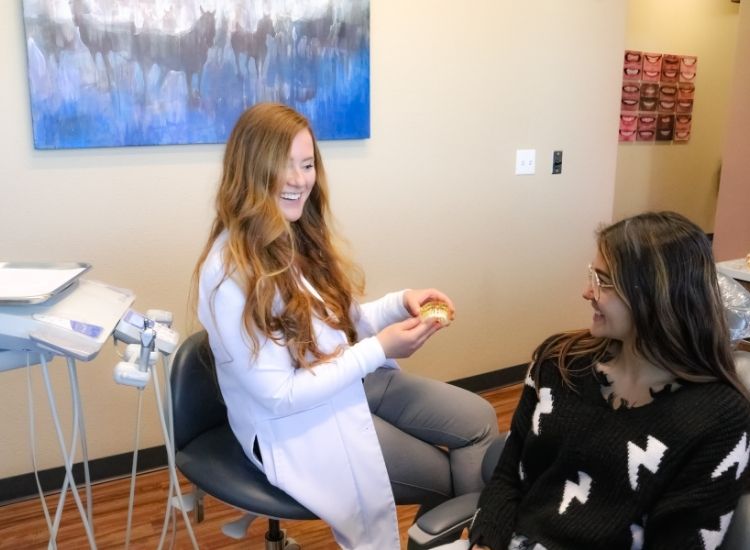
Looking for a cosmetic dentist in Colorado Springs? Here are the questions worth asking, the photos worth seeing, and the warning signs before you commit to treatment.
Continue reading
Looking for a cosmetic dentist in Colorado Springs? Here are the questions worth asking, the photos worth seeing, and the warning signs before you commit to treatment.
Continue reading
With good daily care and regular checkups, the titanium part of a dental implant is designed to last for decades, and in many cases a lifetime, while the crown on top usually needs to be refreshed after about 10–15 years due to normal wear and tear. At Kissing Camels Family Dentistry, we focus on planning, placing, and maintaining implants so Colorado Springs patients can count on them as a long‑term, natural‑feeling solution from a team many consider the best dentist in Colorado Springs, CO.
A dental implant has three main parts:
The implant post (usually titanium or zirconia) that fuses with your jawbone
The abutment, which connects the post to your restoration
The crown, bridge, or denture that you see when you smile
With healthy bone and gums plus good hygiene, the implant post itself can often last 20–30 years or more, frequently the rest of your life. The visible crown or bridge typically lasts around 10–15 years before it needs replacement because of normal chewing wear, fractures, or aesthetic changes.
Not every implant has the same lifespan. Key factors include:
Oral hygiene: Daily brushing and cleaning around the implant keeps plaque from irritating your gums.
Gum and bone health: Healthy tissue and strong bone support help prevent loosening or failure.
Lifestyle habits: Smoking, uncontrolled diabetes, teeth grinding, and chewing very hard objects (like ice or pens) can shorten an implant’s life.
Bite forces: Heavy clenching or misaligned bites can put extra stress on implants and crowns.
Professional maintenance: Regular checkups and cleanings let your dentist catch small issues early.
When these are well managed, studies show implant success rates above 90–95% at 10 years, and many continue functioning well for decades.
Caring for implants is very similar to caring for natural teeth, with a little extra attention at the gumline:
Brush twice a day with a soft‑bristled brush and non‑abrasive toothpaste.
Clean between teeth and around implants daily using floss, interdental brushes, or a water flosser.
Rinse with an alcohol‑free antimicrobial mouthwash if your dentist recommends it.
Wear a nightguard if you grind or clench, to protect both implants and natural teeth.
Avoid chewing very hard items (ice, hard candy, pens, fingernails) that can chip crowns or overload implants.
These simple habits greatly reduce the risk of peri‑implantitis (infection around the implant) and help your implants and crowns last as long as possible.
Even when everything feels fine, implants need periodic professional monitoring.
At Kissing Camels Family Dentistry, your implant maintenance visits typically include:
Checking the gums around the implant for redness, bleeding, or pocketing
Evaluating bone levels on X‑rays when needed
Inspecting the crown or bridge for wear, chips, or looseness
Gently cleaning around the implant with tools designed to protect its surface
Most patients do well with visits every six months, while those with higher risk, like smokers or people with a history of gum disease, may benefit from more frequent maintenance.
Over time, the visible restoration is usually the first part to need attention:
Crowns and bridges may chip, crack, or wear down.
Implant dentures may need relines, new attachments, or replacement as your gums and bone change.
The encouraging news: in many cases, we can replace just the crown, bridge, or denture while leaving the healthy implant post in place. That means you’re maintaining the long‑term “foundation” you invested in, while refreshing the part that does the chewing and shows in your smile.
While no dental treatment can be guaranteed for life, implants come closer than almost any other tooth‑replacement option. With good care:
The implant post can often remain stable for life.
The crown or bridge on top will likely need replacement at some point, much like a regular crown.
Your ongoing habits and dental visits are what turn “long‑lasting” into “lifetime.”
That’s why many dentists describe implants as one of the best long‑term investments you can make in your oral health.
Successful, long‑lasting implants require thoughtful planning, precise placement, and consistent follow‑up. At Kissing Camels Family Dentistry, we focus on:
Careful evaluation of your bone, gums, and bite before recommending implants
Clear explanations of your options, expected lifespan, and costs
Detailed home‑care guidance tailored to your medical history and habits
Ongoing maintenance so we can protect your implants year after year
Patients who are searching for the best dentist in Colorado Springs, CO for dental implants appreciate that we look beyond the surgery itself and focus on helping those implants serve you comfortably for as long as possible.

Many people feel nervous about seeing the dentist, and that anxiety can make it hard to schedule (or keep) appointments, even when you know you need care. At Kissing Camels Family Dentistry, we design every part of the visit to help anxious patients feel safer, more in control, and genuinely listened to by a team many consider the best dentist in Colorado Springs, CO for fearful patients.
Dental anxiety often comes from past bad experiences, fear of pain, embarrassment about your teeth, or simply not liking the feeling of being out of control.
When you call or come in, we invite you to tell us what worries you, sounds, needles, smells, gagging, or anything else, so we can shape the visit around your comfort instead of expecting you to “just deal with it.”
We also agree on a simple “stop” signal (like raising your hand), so you know you can pause treatment at any moment. That sense of control alone can dramatically lower anxiety.
Small details can make a big difference when you’re nervous. To help you feel more relaxed in the chair, we offer comfort measures and distractions such as:
Headphones with music, podcasts, or white noise to block out dental sounds
Cozy blankets or neck pillows to make the chair feel more like home
Stress balls or fidget toys so your hands have something to do
A more upright chair position if lying flat feels too vulnerable
Many anxious patients also feel better bringing a trusted friend or family member with them, when appropriate, for extra support before and after the appointment.
We can coach you through simple relaxation techniques that calm your body’s “fight or flight” response:
Slow, counted breathing: for example, in through your nose for 3–4 seconds, hold for 4, out through pursed lips for 5.
Progressive muscle relaxation: gently tensing and relaxing muscle groups from your toes up to your shoulders and jaw.
Visualization: focusing on a peaceful place, like a favorite trail, beach, or quiet room, while we work.
Practicing these at home before your visit makes them even more effective once you’re in the chair.
Not knowing what’s happening next is a big trigger for dental fear. We take time to:
Explain what we’re doing in plain language before we start
Let you choose how much detail you want during treatment
Break longer procedures into smaller steps with built‑in breaks
If it’s been a while since your last visit, we can start with a simple checkup and cleaning or even just a meet‑and‑greet exam, then build up to more involved treatment only when you feel ready.
For some patients, anxiety is strong enough that extra support is appropriate. Kissing Camels Family Dentistry offers a range of sedation options tailored to your needs and medical history:
Nitrous oxide (laughing gas): Helps you feel calmer while you stay awake and responsive; it wears off quickly after the visit.
Oral anti‑anxiety medications: Taken before your appointment to take the edge off if you’re very nervous.
Deeper sedation options: For select cases and certain procedures, coordinated with your overall health and safety in mind.
We always pair sedation with all the other communication and comfort strategies, so you’re supported in more than one way.
Our goal isn’t just to “get you through” one visit, it’s to help each appointment feel a little easier than the last. Over time, as you experience gentle care, strong numbing when needed, and appointments that truly respect your limits, many patients find their anxiety decreases significantly.
That’s why so many people who once dreaded the dentist now describe Kissing Camels Family Dentistry as the best dentist in Colorado Springs, CO for anxious patients: you’re never treated like “a problem,” just a person who deserves extra care and understanding.
If dental anxiety has kept you away, you don’t have to fix everything at once. Even scheduling a conversation or low‑pressure first visit is a powerful step, and we’re here to make that step as comfortable as possible.