3470 Centennial Blvd, Suite 200
Colorado Springs, CO 80907
Se habla español

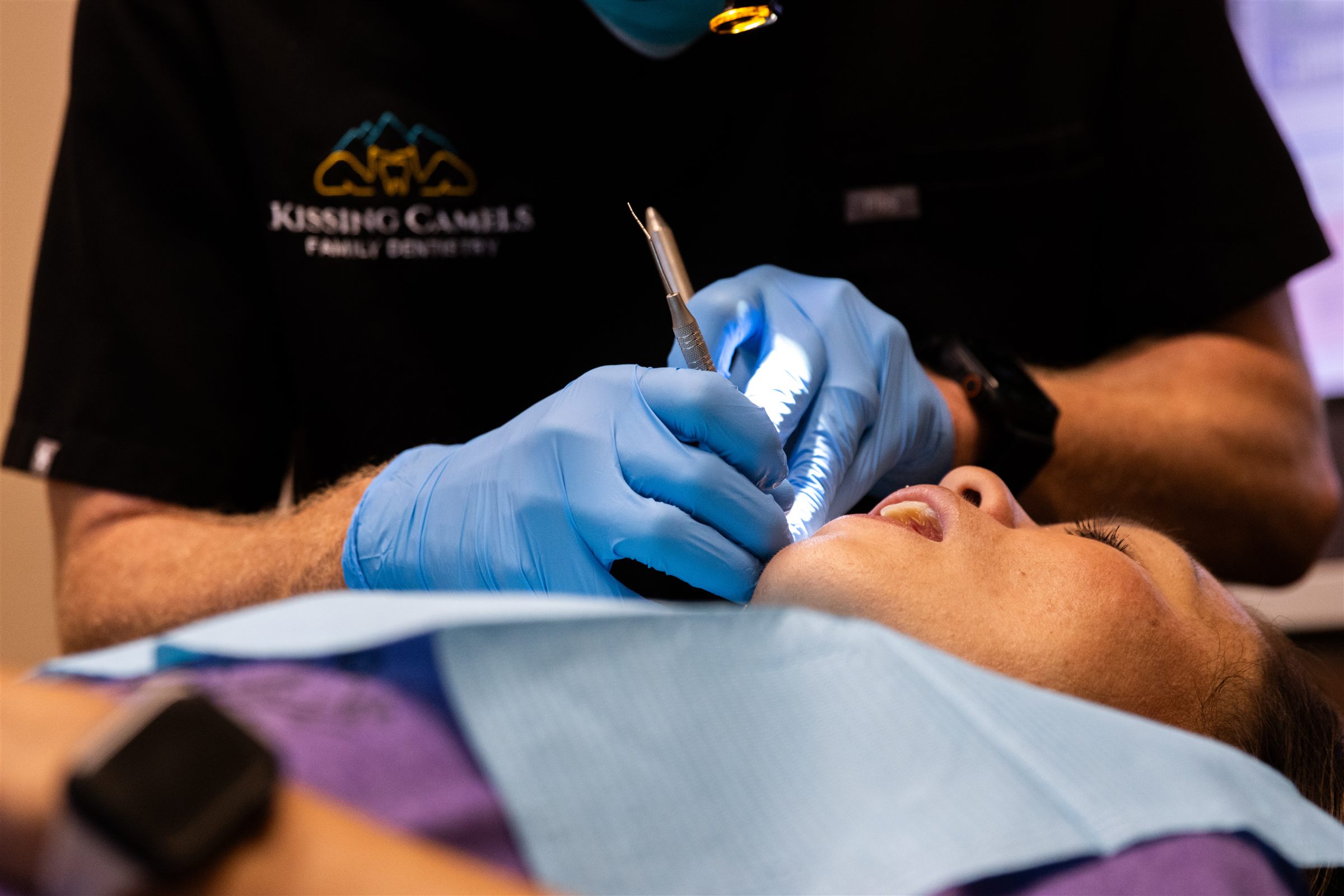
Your teeth work hard every day, and over time that effort shows. An unlucky bite on something firm, a knock to the face, or simply decades of chewing can leave a tooth cracked, chipped, or thinned out. When you feel a rough spot, notice a twinge, or see damage in the mirror, there is no reason to just tolerate it. Here at Kissing Camels Family Dentistry, we use modern, comfortable methods to bring back both how your teeth work and how confident you feel.
The reason a tooth is damaged shapes how we treat it, so we always look for the source. These are the usual suspects:
Fresh damage deserves a prompt check. A tiny crack or chip can widen, reach deeper into the tooth, and eventually cost you the tooth altogether.
Plenty of chips can wait a few days, but certain symptoms should not. Please phone us soon if any of these apply:
Even a painless tooth benefits from early attention, because catching a problem sooner usually leaves room for gentler and often less costly choices.
Small flaws often respond well to bonding. We build up and sculpt a tooth-colored composite resin over the damaged area. Patients like several things about it:
Bonding is a good fit for a small chip on a front tooth, an edge that has worn thin, or an imperfection that bothers your appearance more than your bite.
If a tooth has a serious crack, heavy wear, or too little healthy structure left, we may suggest a crown. This is a cap made specifically for your tooth that fits over everything above the gumline. A crown can do the following:
Teeth with large fillings, deep cracks, or grinding wear tend to benefit most. When someone has heard that a tooth is fragile, a crown can be what keeps it in the mouth.
Front teeth that are chipped, uneven, or shortened by wear sometimes call for a bigger change, and porcelain veneers can provide it. A veneer is a slim shell attached to the front surface of a tooth, and it can:
Veneers are popular when several front teeth need attention or when a patient wants to repair damage and improve aesthetics at the same time. Careful planning keeps the result natural and individual. Ask our team which options are available for your case.
A crack or deep wear can sometimes travel all the way into the pulp, which holds the nerve. That may bring lasting pain, heat or cold sensitivity, or infection, and a root canal might be what saves the tooth. We clear out the injured or infected tissue, clean the inside, seal it, and then usually cover the tooth with a crown. The benefits include:
A tooth that hurts on biting, throbs by itself, or reacts sharply to temperature should be checked early, before the crack gets worse.
Teeth that look flattened, or that show similar chips across several spots, can signal grinding or clenching, known as bruxism. If we fix the damage but ignore the cause, it tends to return. Useful measures include:
Guarding your teeth in this way helps any bonding, crowns, or veneers stay in good shape longer.
Some situations are beyond repair, for example a vertical crack that runs below the gums or a tooth that has broken apart. Removal may then be the healthiest path, and there are several dependable ways to fill the space:
Our goal is always to preserve natural teeth when we can, while still giving you a steady, comfortable replacement if extraction cannot be avoided.
No two damaged teeth are exactly the same. The best answer depends on how much is broken, where the tooth sits, how you bite, and what you hope to achieve. With every patient, we:
If you have spotted a chip, a crack, or a worn area, we would be glad to see you. Contact Kissing Camels Family Dentistry to book an evaluation, and we will outline a clear plan for what comes next.