3470 Centennial Blvd, Suite 200
Colorado Springs, CO 80907
Se habla español

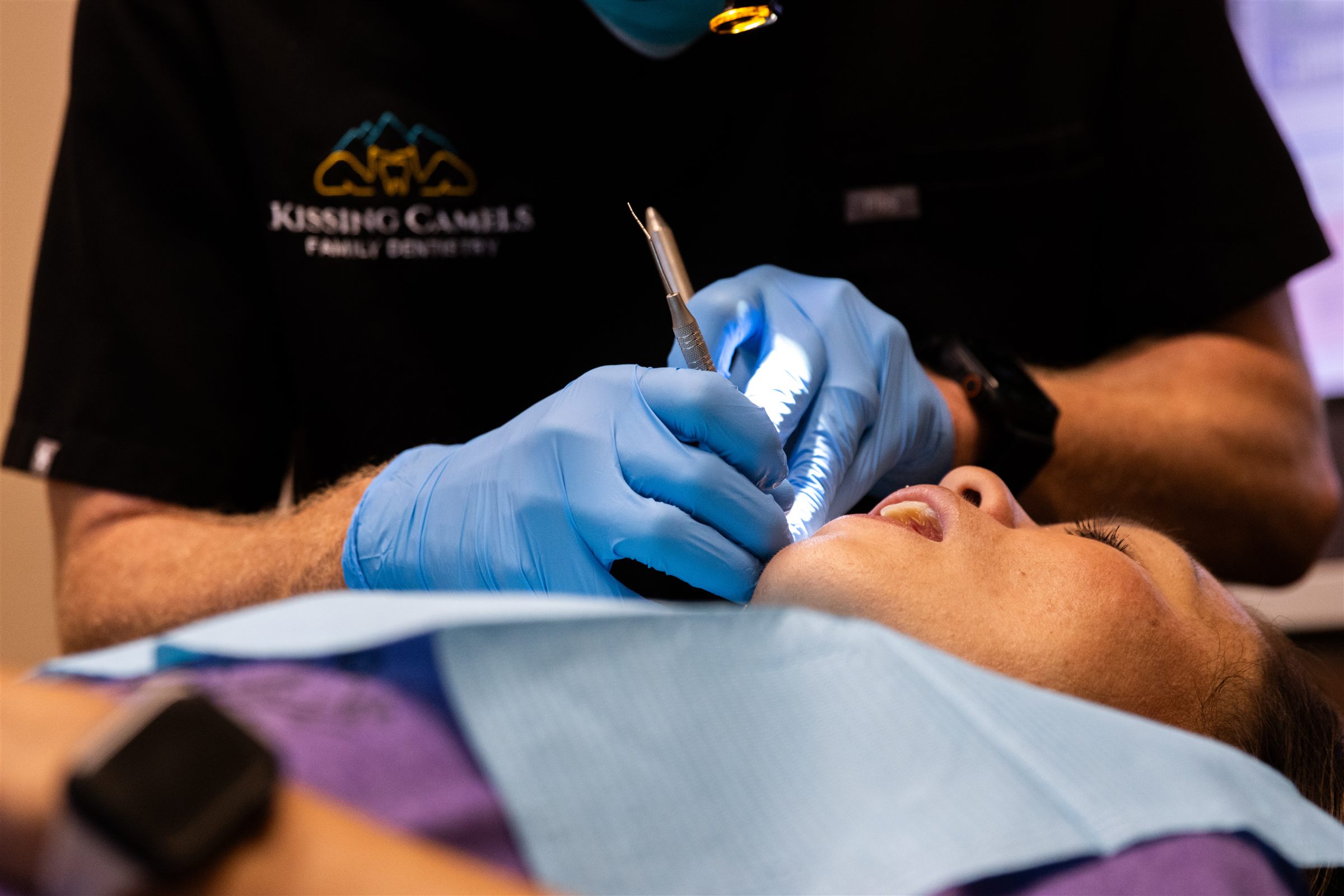
Ask a group of people to name the dental treatment they dread most, and many will say root canal. That image comes from another era. Modern root canal therapy aims to stop pain, keep your own tooth in place, and send you back to your routine in comfort. With a caring team like ours at Kissing Camels Family Dentistry in Colorado Springs, patients often discover the visit is far more ordinary than they had imagined.
The goal of a root canal is to rescue a tooth that has become infected or deeply inflamed, so that it does not have to come out. Inside each tooth sits soft tissue known as pulp, home to nerves and blood vessels. If bacteria find their way in through deep decay, a crack, an injury, or a history of repeated dental work, the pulp can become infected and cause serious pain.
In the procedure, the dentist takes out the affected pulp, cleans and disinfects the empty space, and then fills and seals it so that bacteria cannot return. Afterward, a crown is frequently placed over the tooth to shield it and bring back its strength and its look.
We recommend a root canal when the evidence suggests the nerve is injured or infected. Symptoms to watch for include:
Pain can be unpredictable. It may come and go, or it may vanish entirely once the nerve has died, while the infection stays behind. For that reason, an exam and X-rays are so valuable. We will tell you what we see and explain why a root canal may be the sensible recommendation.
Understanding each stage takes a lot of the mystery, and the fear, out of it. A modern root canal resembles a filling appointment far more than the scary stories suggest. The usual sequence looks like this:
We keep an eye on how you are doing all through the visit, and we describe each step as we go.
Patients ask this before anything else. With the anesthetics and methods we have now, a root canal should feel a lot like having a routine filling done. The severe pain that gives root canals their reputation typically comes from the infection, rather than from the treatment.
Some soreness afterward is normal, especially when you chew, and it tends to be mild. Nonprescription pain relievers, when they are safe for you, usually take care of it, and most people find it much gentler than the toothache that brought them in.
It is fair to ask why we would not just remove the tooth. Sometimes extraction really is the right call, yet holding on to your natural tooth offers real benefits:
If any of these worries have crossed your mind, we are glad to talk them over before you decide.
You will go home with clear directions for looking after the tooth. In general, plan on the following:
After the final crown goes on, the tooth should look and behave much like the ones around it. With diligent brushing and flossing, plus regular checkups, a tooth that has had a root canal can serve you for many years.
Much of how you feel about a root canal depends on who is treating you. Here is what you can count on from us at Kissing Camels Family Dentistry:
If a tooth has been troubling you, or you have been delaying a root canal someone recommended, please reach out to us. We would be happy to answer your questions and find a time for you to come in.