3470 Centennial Blvd, Suite 200
Colorado Springs, CO 80907
Se habla español

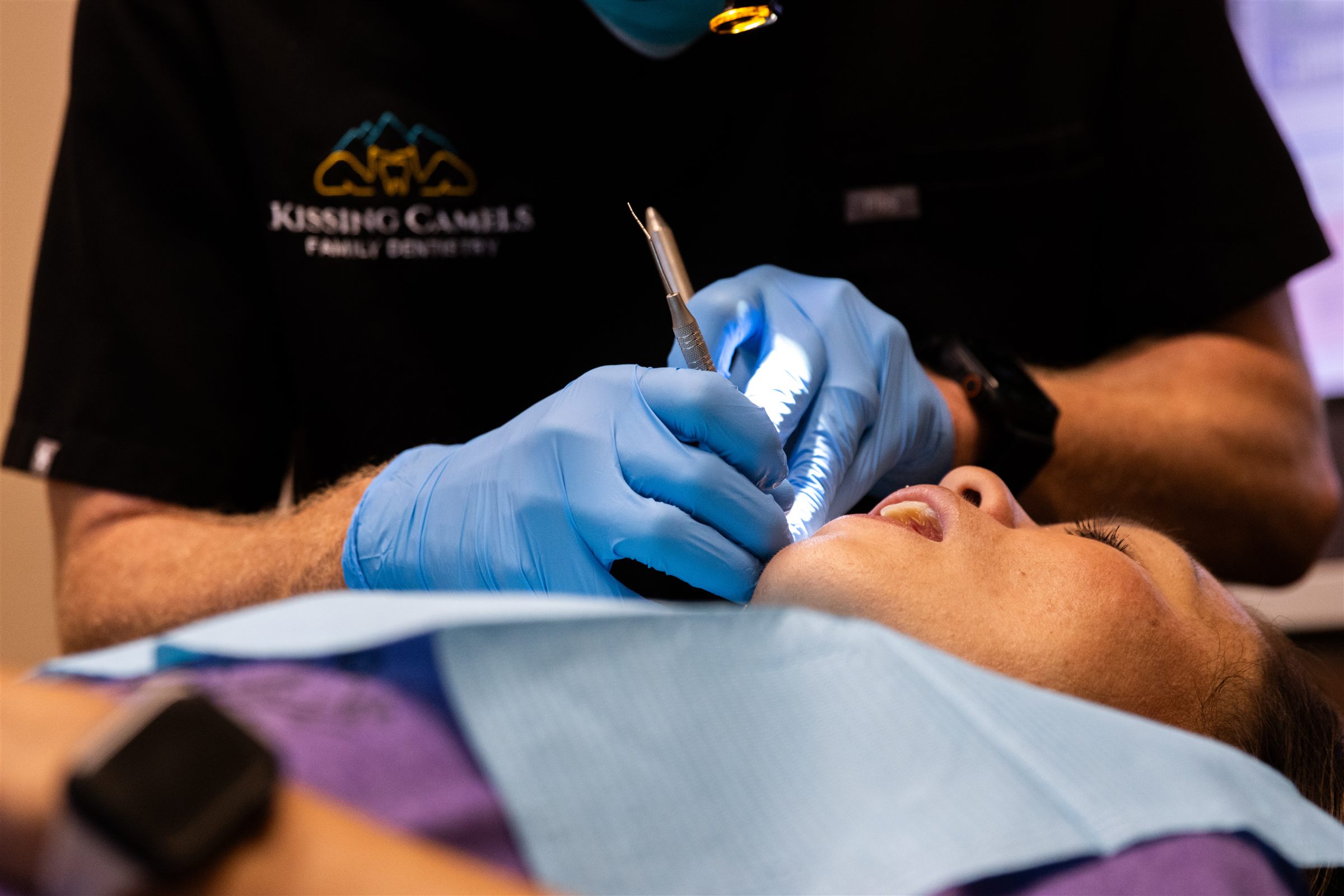
That fresh, slick feeling after a hygiene visit is nice, but it is only the surface benefit. Keeping up with cleanings is one of the smartest moves you can make if you want to avoid fillings, crowns, root canals, and pulled teeth. At Kissing Camels Family Dentistry, we think of each cleaning as protection that stops minor issues from snowballing into large and costly treatment.
A cleaning follows a careful sequence aimed at everything that home care misses. When you visit, your hygienist typically does the following:
Even a person who brushes and flosses faithfully has hiding places where bacteria gather: narrow grooves, tight contacts, and the pocket just under the gum. Our instruments and training let us reach those spots much better than a brush can.
Bacteria feed on sugar and produce acid, and that acid slowly eats into enamel. After decay pushes through the hard outer layer, it can move faster through the softer material underneath. The eventual result may be pain, followed by a filling, a crown, or a root canal.
Routine cleanings interrupt that chain of events in a few ways:
Treatment for an early problem is usually mild and quick. It might be a fluoride treatment, a sealant, or a modest filling.
Gums and jawbone form the foundation under your teeth, so their health deserves as much attention as the teeth themselves. Gum disease starts when plaque and tartar inflame the gum tissue. If cleanings are skipped, the following can develop:
A cleaning takes out the deposits that spark the inflammation. When gum trouble is caught early, focused treatment can slow it down or halt it, which lowers the chance of needing deep cleanings, gum surgery, or extractions later.
Most hygiene visits come with an exam, and it is a strong tool for keeping treatment small. Your dentist may:
Noticing something sooner usually means a simpler fix. A hairline crack, or wear from grinding at night, might call for a mouthguard or a minor repair, which is far easier than dealing with a tooth that has broken and needs a full crown.
Lots of root canals and extractions can be traced to trouble that went unnoticed for too long. When decay is deep or infection lingers, the nerve can become involved, causing pain, abscesses, and damage to the structure of the tooth.
Regular cleanings reduce that possibility because they:
Sticking with your visits improves the odds that a problem is handled while the solution is still straightforward.
Your mouth and body are connected. Research has associated gum disease with several other health concerns, such as:
Keeping gum inflammation calm is one way that cleanings contribute to your wellbeing. We try to keep the full picture in mind and to help you look after both your mouth and your overall health.
Pushing a cleaning back is easy when your calendar is full, but the delay tends to be expensive down the line. Think about how the two paths compare:
Costs vary, so please call us if you would like an estimate for any treatment. In general, prevention is the gentlest and most economical route.
Cleanings do the most good when they are part of an ongoing relationship with people you trust. If preventive care is a priority for you, here is what you can look forward to at our office:
If it is time for your next cleaning, we would love to see you. Contact Kissing Camels Family Dentistry to schedule, and we will help you protect your smile for years to come.