3470 Centennial Blvd, Suite 200
Colorado Springs, CO 80907
Se habla español

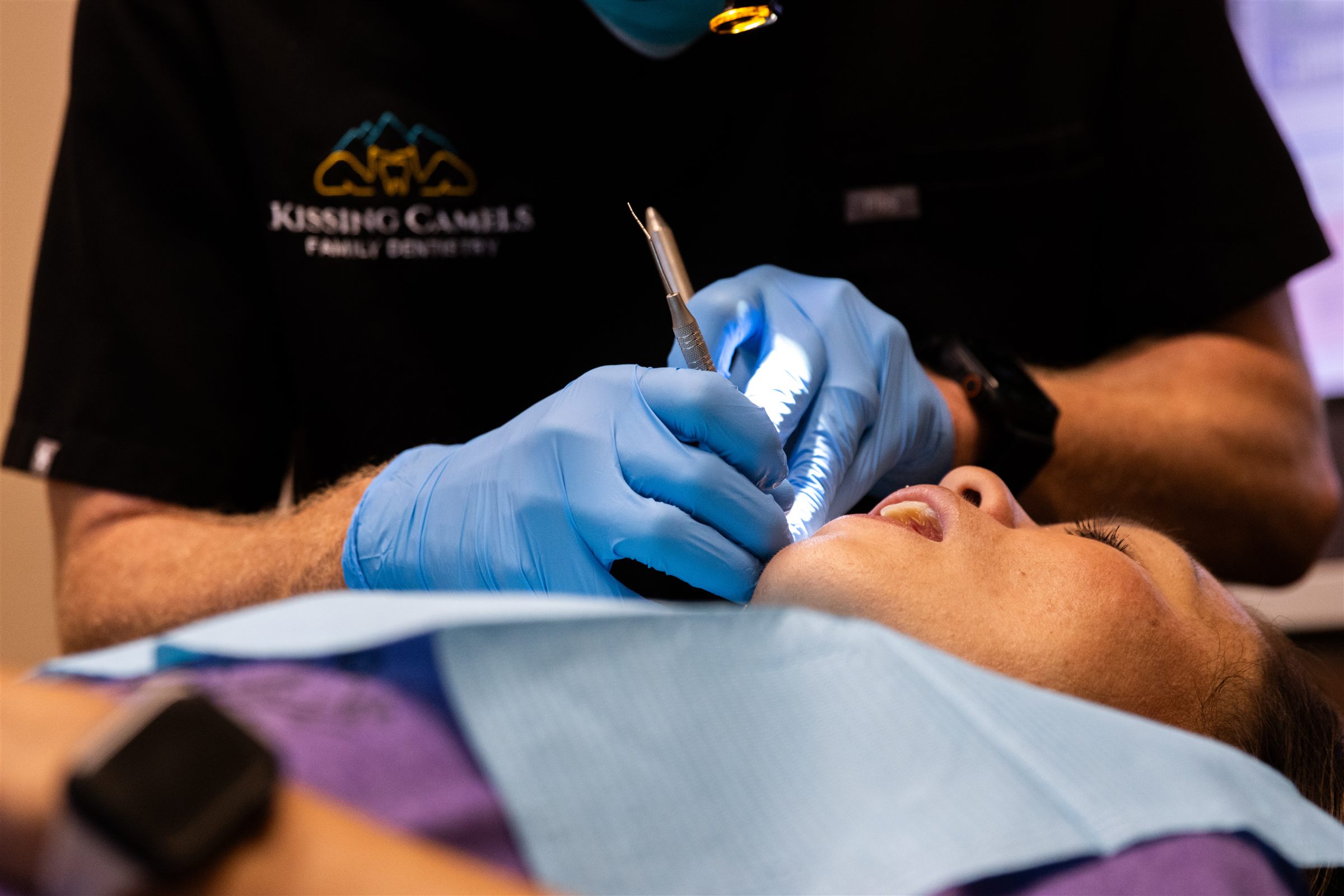
For plenty of kids, a dental appointment is scary. A child who is already worried, or who remembers a visit that hurt, may struggle to sit through treatment at all. Sedation is one option that can help a child relax enough to get the care they need. At Kissing Camels Family Dentistry, we want young patients to feel secure, and Colorado Springs parents often ask us how sedation actually works. This overview explains the basics, so you know what to ask and what to expect. Please ask our team which sedation options are available at our office.
In pediatric sedation dentistry, medicine is used to help a child stay calm while a dentist works. The effect can be mild, leaving a child wide awake but relaxed, or moderate, leaving a child drowsy but still able to answer questions and follow directions. Deeper sedation or general anesthesia is reserved for certain situations, such as lengthy or complicated procedures, severe anxiety, or special health needs.
Usually the point is not to put the child to sleep. It is to take the edge off fear so the treatment can go ahead safely and gently.
There are a number of situations in which sedation can make sense:
When the approach is right, the dentist can finish the work, and the child does not leave with a frightening memory.
Which option is best depends on the procedure, your child's health, and how anxious they are. Here are the kinds that are commonly discussed in pediatric dentistry.
This gentle sedative is breathed in through a small mask over the nose. A child remains awake and able to chat, only more relaxed. Its effects fade soon after the mask comes off, which is why many children can get on with their day afterward.
A child swallows a prescribed medicine, either as a liquid or as a pill. The relaxation is deeper than with gas, and sleepiness is possible, though children normally stay conscious. Dentists often consider it for long appointments or for children who are very worried.
Here the medication goes straight into the bloodstream through a vein, so the effect comes on faster and can be adjusted more precisely. The care team keeps a close eye on the child the entire time.
A few situations, such as very complicated procedures or certain special-needs cases, may call for general anesthesia. In that case the child sleeps completely and is watched continuously. Ask our team which of these options make sense for your child and which ones are available.
Any kind of sedation requires serious attention to safety. Responsible care involves careful protocols and monitoring, such as:
When a qualified team follows these steps, parents have good reason to feel more comfortable.
Some simple preparation can help the day run smoothly:
Families can gain in several ways:
When appointments are less stressful, children learn habits that follow them into adulthood.
We care for kids along with adults, and we aim to give children of every age a welcoming, supportive experience. Patience and a gentle hand help each child feel understood. Families in Colorado Springs turn to us for attentive care that looks after both the mouth and the whole child.
With the right support, a frightened child can receive treatment without fear taking over. If your child feels anxious, faces a bigger procedure, or simply needs extra reassurance in the chair, we would be happy to go over the choices with you. Call Kissing Camels Family Dentistry to schedule a visit and find out what approach would suit your child best.