3470 Centennial Blvd, Suite 200
Colorado Springs, CO 80907
Se habla español

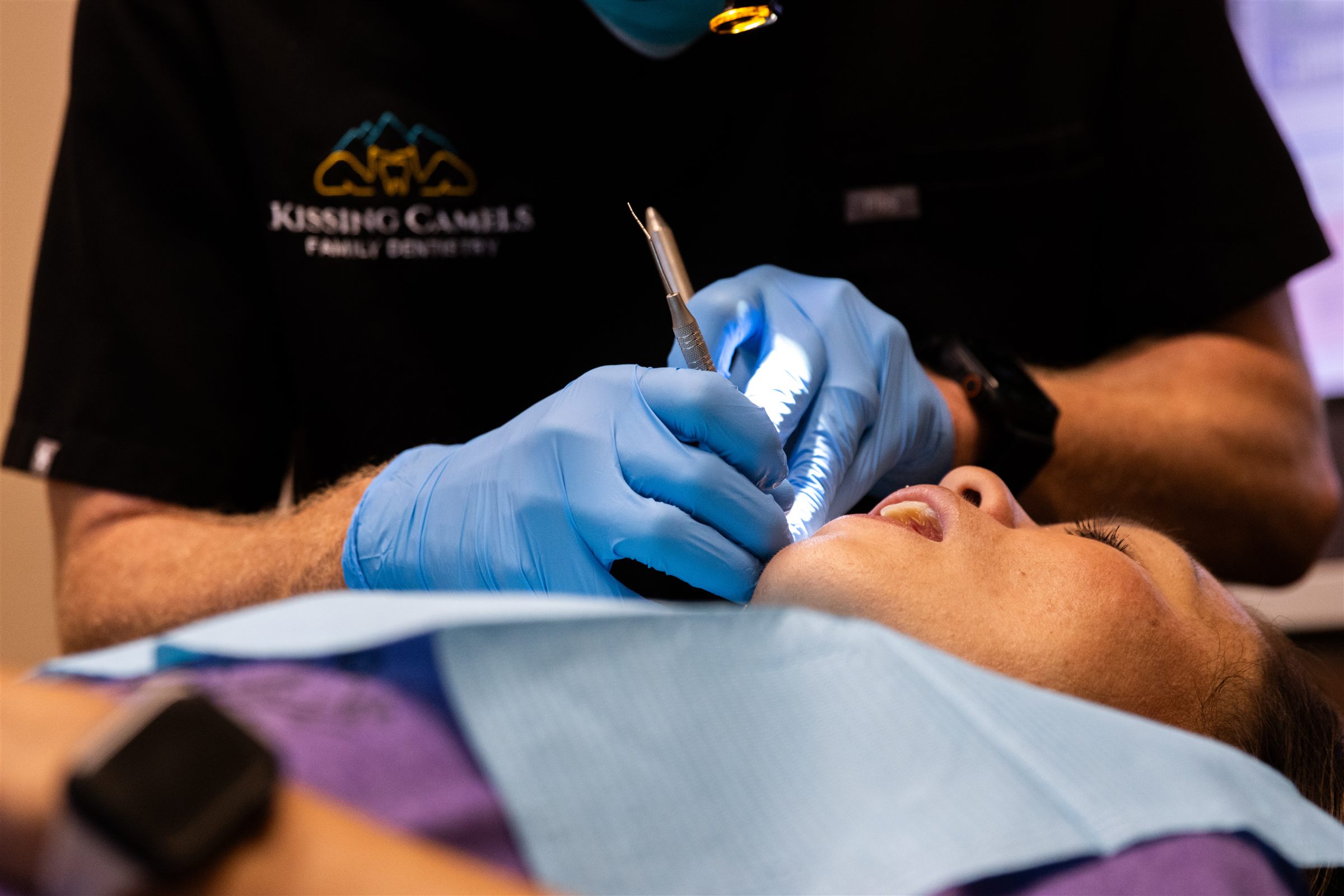
Nobody's mouth stays the same forever. After decades of chewing, teeth show wear, gum tissue may pull back, and some prescriptions or ongoing health conditions make everyday care more of a challenge. Still, your smile deserves just as much attention now as it ever did, and probably a bit more.
Here at Kissing Camels Family Dentistry, we welcome patients of all ages from around Colorado Springs, older adults very much included. You might have all of your own teeth, a set of dentures, or a few implants. In each case, good habits paired with regular professional care can keep your mouth comfortable and your confidence high. The suggestions below are a place to start.
Simple habits still do most of the work. Brush in the morning and at night, and clean between your teeth every day. A toothbrush clears plaque from the surfaces it can reach, and floss handles the tight spaces it cannot.
Sore joints or stiff fingers can make a regular brush hard to hold. An electric toothbrush, or a manual one with a wide, cushioned handle, often solves the problem. Anyone with bridges, implants, or dentures should also ask us about cleaning aids like tiny interdental brushes and floss threaders, which help you get around dental work with less fuss.
As we age, the odds of gum disease, dry mouth, and tooth loss go up. Regular exams give us the chance to notice problems while they are still easy to treat. For most older patients, a visit roughly twice a year works well, and we may ask you to come more often if your mouth needs closer attention.
During an exam we compare how things look with your last visit, check how your dentures or implants are fitting, and look for early hints of trouble such as bone loss or oral cancer. We do our best to keep each appointment relaxed and gentle, with plenty of time for your questions.
Many older adults deal with a dry mouth, and medications or medical conditions are frequent causes. Saliva protects teeth and helps with chewing and swallowing, so when there is less of it, decay and gum problems become more likely.
Several simple steps can bring relief.
When dryness will not go away, tell us. There are additional products and approaches we can discuss to help protect your teeth.
Your meals have a direct effect on your teeth, gums, and the bone that supports them. A balanced plate is a good goal, and here is what to lean toward.
People with dentures or gaps where teeth once were should take care with hard or sticky foods. If chewing has become uncomfortable, mention it at your next visit. Replacement options such as implants or bridges may be worth discussing.
Gum disease affects many older adults, but in most cases it can be prevented. Red, puffy, tender, or bleeding gums are warning signs, and so is gum tissue that seems to be moving away from the teeth. If it is left alone, teeth can loosen and eventually be lost, and research has connected gum disease to other health concerns as well.
To keep your gums in good shape:
Denture wearers should scrub their dentures each day with a soft brush and a product made for that purpose. Everyday toothpaste can be too gritty and may scratch the surface. Rinse them after eating, and ask us how to handle overnight storage for your particular type of denture.
Implants need careful cleaning too, because buildup around them can inflame the surrounding gum tissue. We are happy to demonstrate good technique and point you toward helpful products. When you come in for routine visits, we can also confirm that everything still fits well and feels natural.
Oral cancer becomes more likely as people get older, especially in those who use tobacco or drink alcohol. Catching it early gives treatment the best chance of working. As part of your checkup, we look over the mouth and throat area for odd sores, lumps, or changes in the tissue. It takes very little time and does not hurt.
Between visits, pay attention to a sore that is slow to heal, difficulty swallowing, or new changes on your tongue or gums. If any of these show up, please call us soon.
There is no age at which it becomes too late to feel better about your teeth. Whether you are thinking about repairs to damaged teeth, aesthetic improvements, or help with gum health, our team will work through the options with you at a pace that feels right.
A healthy mouth makes mealtimes more enjoyable, helps you speak with ease, and lets you feel good when you smile. If you are ready to put your dental care first, reach out to Kissing Camels Family Dentistry and we will get you on the schedule. We look forward to helping you keep smiling.