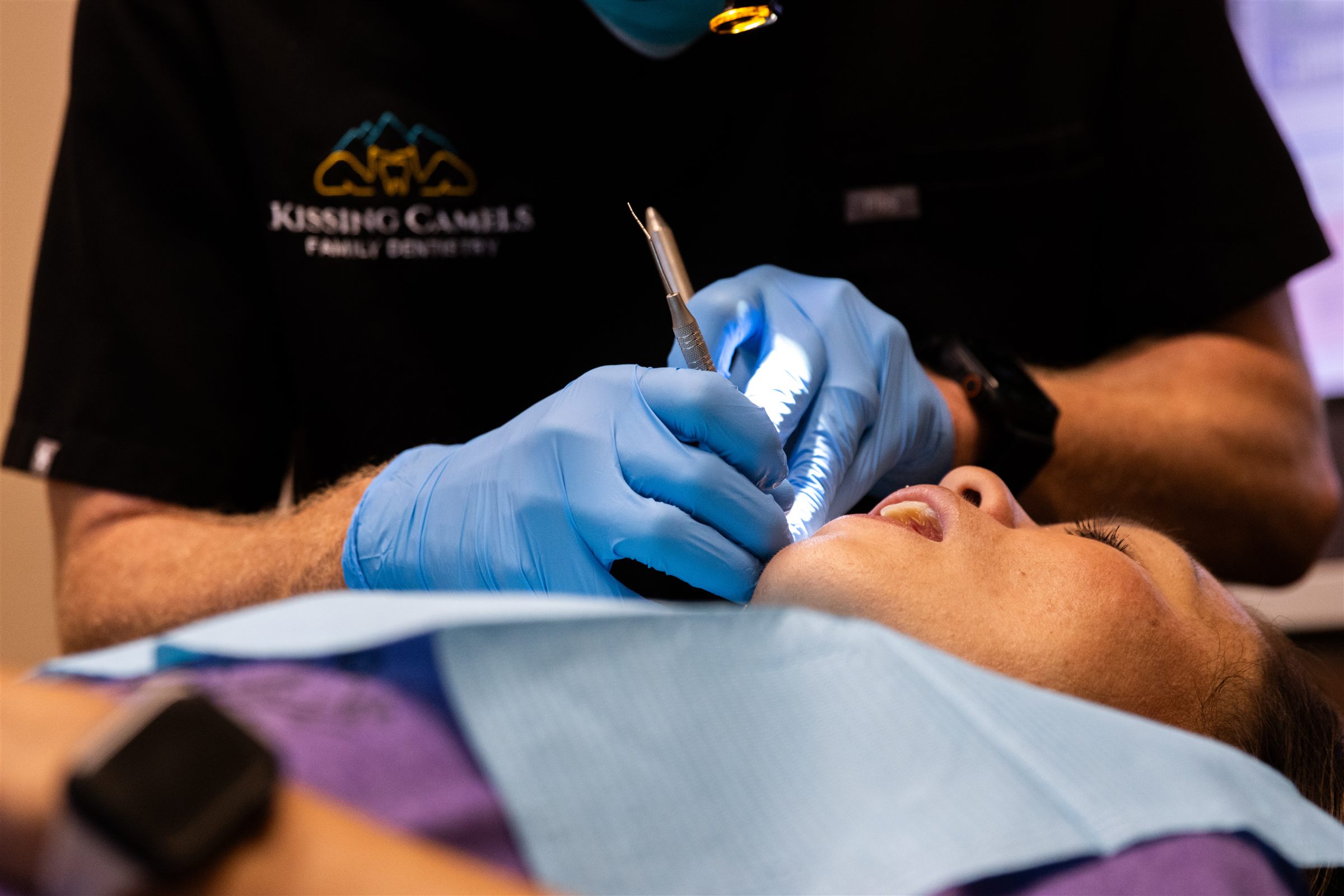
Being told you need a tooth removed can be unsettling. The good news is that modern techniques and sedation choices make the experience much easier than many people imagine. At Kissing Camels Family Dentistry, comfort, safety, and clear communication guide how we approach extractions. This article explains when a tooth may need to come out, what happens during the procedure, and how sedation can help.
When Removal Becomes Necessary
We only recommend extraction when a tooth cannot be saved by other means. Reasons can include:
- Severe decay: The cavity is too large for a filling or crown to repair.
- Advanced gum disease: The bone and tissue supporting the tooth have weakened.
- Broken teeth: A fracture reaches below the gumline or leaves too little tooth.
- Impacted teeth: Wisdom teeth that are trapped or causing crowding are often removed.
- Crowding: Sometimes teeth are removed to make room before orthodontic treatment.
- Infection: A tooth that is infected may put nearby tissue and your health at risk.
What Happens During an Extraction
- Exam and X-rays: We evaluate the tooth and plan the safest approach.
- Numbing and sedation: Local anesthetic numbs the area, and sedation can help you stay relaxed.
- Removal: A simple extraction is used for a tooth that is visible above the gumline, and we gently loosen and lift it out. A surgical extraction may be needed for an impacted or broken tooth and can involve a small opening in the gum.
- Aftercare: You receive clear written and verbal instructions for recovery, including how to manage swelling and discomfort.
How Sedation Can Help
Dental anxiety is very common. Sedation is a way to help you feel calm while we work. Options can range from mild to deeper levels of relaxation, and the right choice depends on your comfort, your health history, and the complexity of the procedure. Common forms of sedation in dentistry include:
- Nitrous oxide: A mild gas you breathe through a mask. You stay awake but relaxed, and it wears off quickly.
- Oral sedation: Medication taken before the appointment to reduce nervousness.
- IV sedation: A deeper level of relaxation delivered under close monitoring, typically for more anxious patients or longer procedures.
Please ask our team which sedation options are available for your visit and whether they are appropriate for you.
Why Sedation Is Worth Considering
- Less anxiety, even for very nervous patients
- More comfort during and after treatment
- Easier work for the dentist, which can make treatment more efficient
- An experience many patients describe as much shorter than expected
Healing After Extraction
Everyone recovers a little differently, but these steps help:
- Bite gently on gauze to control bleeding
- Skip straws and smoking, which can dislodge the blood clot and lead to painful dry socket
- Rest and use cold packs to limit swelling
- Stay with soft foods for the first few days
- Take any prescribed medications exactly as directed
Most people feel noticeably better within a few days. Call us if pain worsens, bleeding will not stop, or you notice signs of infection.
What to Look for in a Dental Team
Choose a team with gentle technique, modern tools, sedation options suited to you, and a caring attitude. We aim to explain each step, answer your questions, and support you from consultation through recovery.
Extractions Do Not Have to Be Frightening
With the right planning and comfort measures, you can get the care you need without dread. Whether the problem is a painful wisdom tooth, heavy decay, or crowding, we are ready to help. Contact Kissing Camels Family Dentistry to schedule a consultation and talk about your comfort options.