3470 Centennial Blvd, Suite 200
Colorado Springs, CO 80907
Se habla español

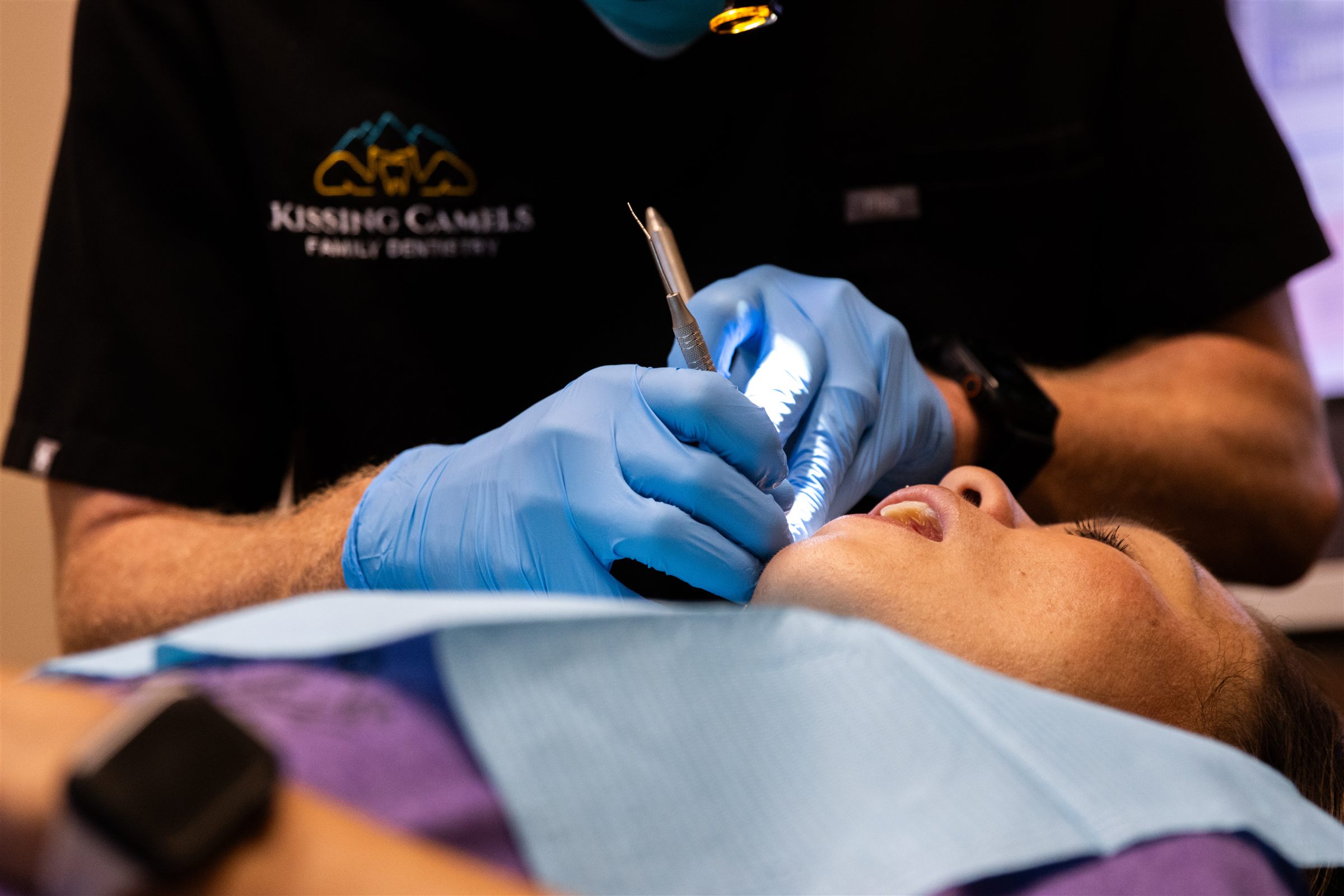
Plenty of people tense up at the mention of a root canal, but the whole point of the procedure is to stop a painful tooth from hurting. After the work is finished, your attention turns to healing, and it helps to know what the next few days will look like. At Kissing Camels Family Dentistry, we stay with our patients from the first exam through the final follow-up. Below, we cover what recovery usually feels like and how you can give your tooth the best chance to settle down.
Inside every tooth sits soft tissue called pulp. Deep decay, a crack, or a hard knock can leave that pulp infected or inflamed, and a root canal addresses the problem at its source. The general steps are:
The result is that your own tooth stays in your mouth, and an extraction may not be necessary.
Many people get back to their usual routine fast, although a few mild effects are common at the start:
Expect the tooth to feel a bit tender when you bite down or press on it. That tenderness typically eases over a few days, and over-the-counter pain medicine taken according to the label often keeps it under control.
The gum around the tooth may look slightly puffy or feel tender because it was near the work area.
Some patients wear a temporary crown while the permanent one is being made. Because it is not held as firmly, chew gently so it stays in place.
Should we prescribe an antibiotic, an anti-inflammatory, or a stronger pain reliever, use it exactly as instructed.
Give that side of your mouth a rest from chewing until the final restoration is placed. The tooth is at its weakest during this stretch, so a little patience protects it.
During the first day or two, choose gentle options such as yogurt, mashed potatoes, pasta, smoothies, or scrambled eggs. As the tooth feels better, bring back crunchier and chewier foods one at a time.
You still need to brush and floss every day. Simply use a lighter touch around the treated tooth. A clean mouth makes complications less likely.
Hot and cold may bother the tooth for a while. Foods and drinks near room temperature will feel best until that reaction fades.
Bodies heal at different speeds. Many patients feel like themselves again after a few days to about a week. The permanent crown or filling that completes the tooth is scheduled after the root canal, and our team will explain the timing that fits your situation. When that final piece is in place, the tooth can do its job again.
Call the office if any of the following happens:
Speaking up early lets us fix small setbacks before they become larger ones.
Whoever treats your tooth should offer gentle, careful care, spell out aftercare in plain language, check in to make sure you are healing, and finish the job with a sturdy restoration. Those are the standards we hold ourselves to.
Once the final restoration is done, the tooth should look and feel much like its neighbors. Brushing, flossing, and keeping up with routine dental visits help a treated tooth serve you well for many years. We often hear from patients who wish they had scheduled treatment earlier, since the end of the pain made such a difference for them.
A lingering toothache rarely goes away on its own, and acting sooner gives you a better chance of keeping the tooth. If you think you may need a root canal, or you would like another opinion, we would be glad to hear from you. Reach out to Kissing Camels Family Dentistry, and we will help you find relief.