3470 Centennial Blvd, Suite 200
Colorado Springs, CO 80907
Se habla español

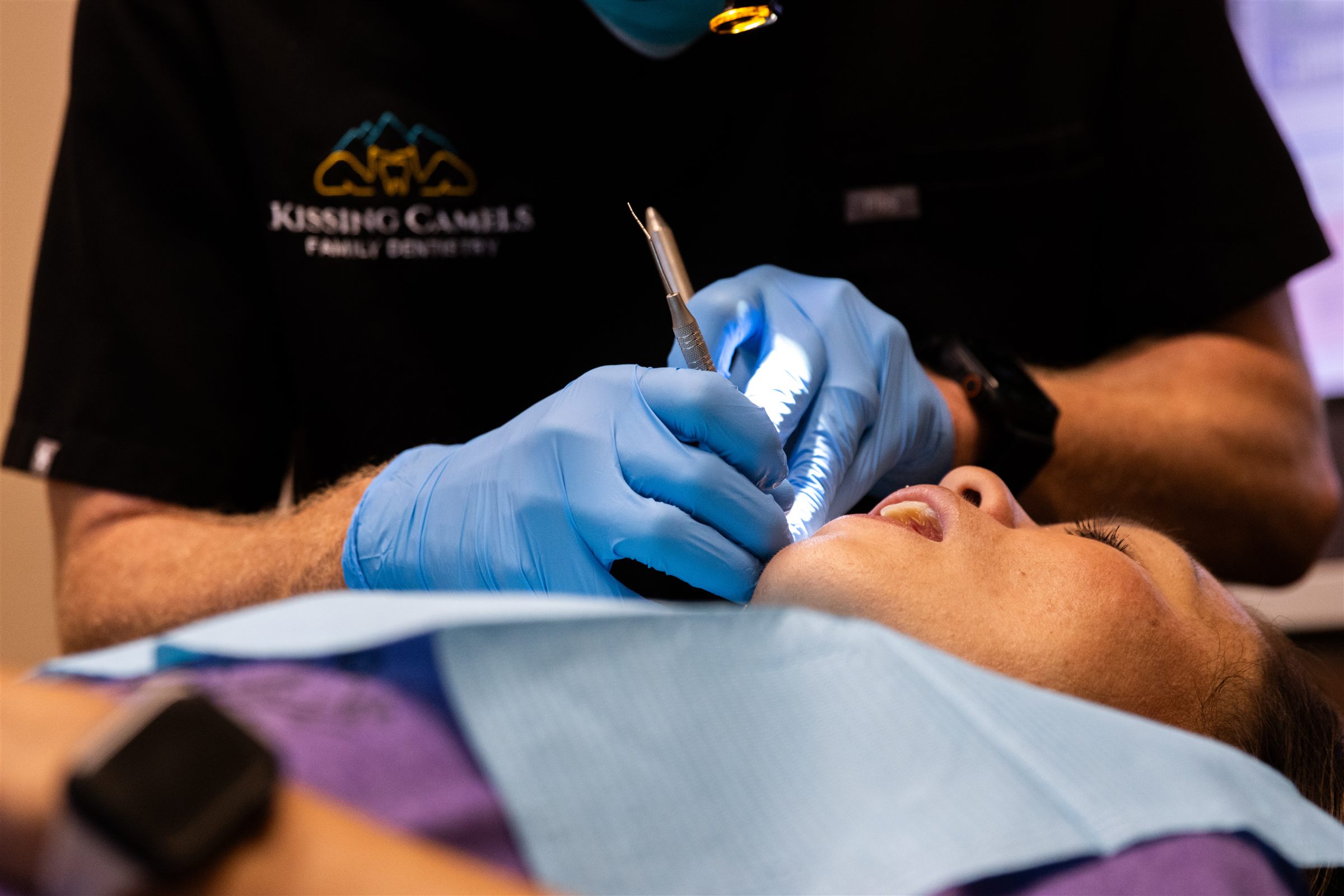
Nobody looks forward to hearing that a tooth has to come out, but sometimes removal is the healthiest choice for the rest of your mouth. At Kissing Camels Family Dentistry in Colorado Springs, we always try to save natural teeth first. Still, there are situations where that is not possible. Knowing the warning signs helps you seek care before a small problem grows. Here are the most common ones.
Cavities are among the most frequent dental problems, and untreated decay eats deeper into a tooth over time. Once it reaches the inner layers, infection can follow. If the damage is too extensive for a filling or a root canal to rescue the tooth, extraction may be the safest course.
Pain or sensitivity that lingers is a reason to come in. We will examine the tooth and explain whether it can be restored or needs to be removed.
Periodontitis is a progressive infection of the tissues that hold your teeth in place. As it worsens, gums pull away and teeth can become loose or start shifting. In advanced cases, a tooth may lose so much support that it cannot stay.
Bleeding when you brush, swollen gums, and ongoing bad breath are early hints. Treating gum disease sooner can often help you avoid losing teeth.
Third molars frequently lack the room to come in fully. When they stay trapped beneath the gum or emerge at an angle, they are said to be impacted, and they can cause pain, infection, and harm to the teeth beside them. If you feel soreness at the back of your jaw, or notice redness or swelling around the gums there, let us check. Removal is a common solution.
Small chips can often be repaired with bonding or a crown. A fracture that extends down toward or into the root, however, may leave a tooth that cannot be saved, and removing it can prevent infection. If you have had an injury or a tooth has split, contact us promptly so we can review your choices.
Sometimes there simply is not enough room in the jaw for all the teeth to line up properly. In that case a dentist or orthodontic provider may recommend removing one or more teeth to create space, which is fairly common before braces or clear aligners. Crowding also makes cleaning harder, so if you struggle to keep certain areas clean, bring it up at your visit.
An abscess is a pocket of pus that forms when bacteria reach the root of a tooth or the surrounding gum, often because of deep decay or a crack. Signs include severe pain, swelling, and a bad taste in the mouth. Treatment may include removing the tooth so the infection does not spread. An abscess should always be evaluated right away.
Adult teeth should not wiggle. Looseness can signal advanced gum disease or trauma. If the tooth is no longer stable in its socket, extraction may help prevent infection and protect nearby teeth. Difficulty chewing or new discomfort is a cue to schedule a visit.
A root canal often saves an infected or badly decayed tooth. When the infection is too advanced, the tooth is too weak, or trouble keeps coming back, removal may be the better path. If a treated tooth still bothers you, let us know.
An extraction is never a decision we take lightly, and we will explain your options every step of the way, including how we work to keep you comfortable. If you notice any of these signs, do not wait for things to get worse. Contact Kissing Camels Family Dentistry to schedule an evaluation with our team.