3470 Centennial Blvd, Suite 200
Colorado Springs, CO 80907
Se habla español

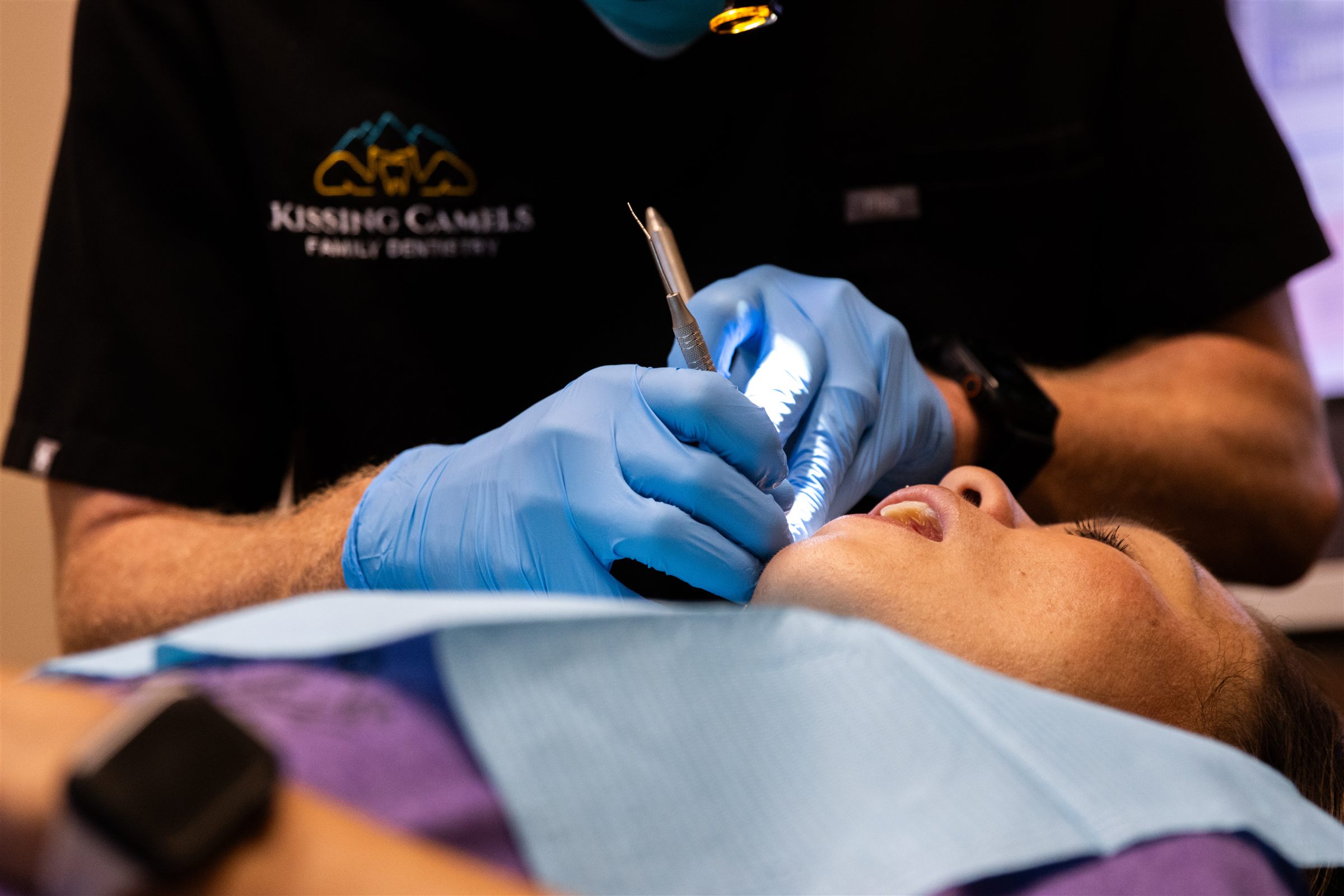
If you are thinking about replacing missing teeth with implants, it helps to know what lies ahead. At Kissing Camels Family Dentistry in Colorado Springs, we guide patients through every stage so nothing comes as a surprise. This overview covers the major steps from the first visit to the finished tooth.
An implant is a small titanium post placed in the jawbone to serve as a replacement root. A custom crown is attached on top. Unlike dentures or bridges, an implant becomes anchored in the bone, which gives it stability and a feel close to a natural tooth.
Implants restore your appearance and also help your mouth stay healthy. They stimulate the jawbone to slow bone loss, keep neighboring teeth from drifting, and support normal biting and chewing. They are cared for much like natural teeth, and with proper maintenance they can last many years.
We start by reviewing your oral health and medical history and hearing about your goals. X-rays or a three-dimensional scan may be used to study your bone structure and see whether there is enough bone to hold an implant.
Checking the bone: If the bone is thin, a bone graft may be recommended to build it up. This is a common step that helps the implant succeed over the long term.
If implants are right for you, we put together a plan that lists how many implants you need, the type that fits your case, and any preparation such as extractions or grafting. We explain each part so you know what to expect.
Placement is usually done with local anesthesia, and sedation may be available if dental anxiety is a concern. The dentist opens the gum slightly, prepares a space in the bone, and positions the post. After that, the bone needs time to heal and grow around the implant, a process called osseointegration. It usually takes a number of months, and the timeline differs from person to person.
Once the implant has bonded with the bone, a small connector called an abutment is added. This brief procedure may use local anesthesia, and the gum around it needs a short time to heal.
Finally, the custom crown is fixed to the abutment. It is made to match the color, shape, and size of your other teeth, so it blends in. At this point you can chew, speak, and smile with ease.
Brush and floss as you would with your natural teeth, and keep your regular checkups and cleanings. Healthy gums around the implant are essential to its long-term success.
If you are missing one or more teeth, implants may be worth exploring. Every mouth is different, so we will look at your situation and explain whether they are a good match or whether another option might suit you better.
Missing teeth do not have to hold you back. Contact Kissing Camels Family Dentistry to set up a consultation, and we will help you understand your choices and plan your next step.