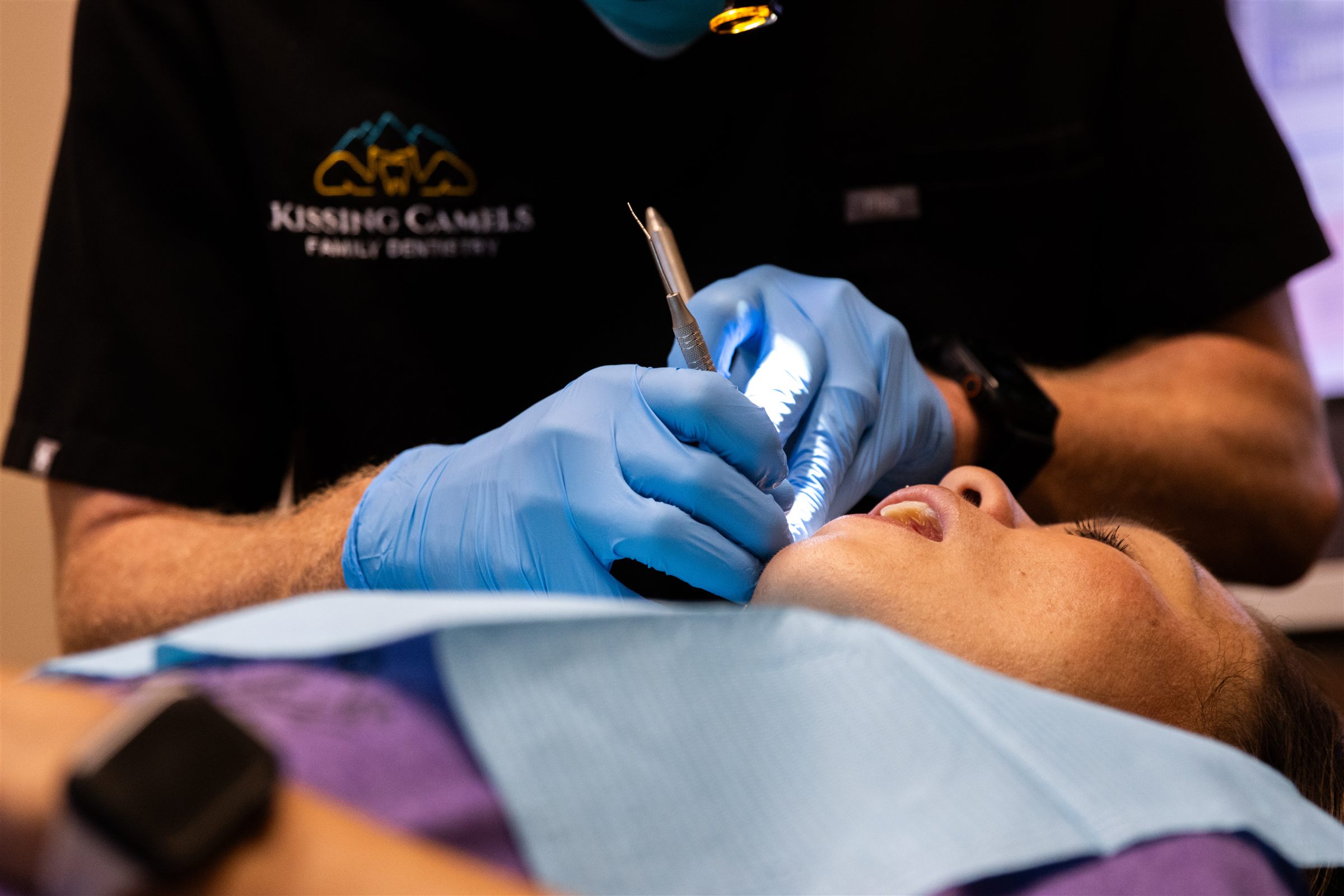
Gum disease often develops quietly, and many people do not realize how serious it can become. The good news is that with knowledge and regular dental care, it can be managed. Our team at Kissing Camels Family Dentistry in Colorado Springs wants you to know what to look for and what can be done.
What Gum Disease Is
Gum disease, also called periodontal disease, affects the gums and the structures that hold your teeth in place. It usually starts as gingivitis, which is inflamed gum tissue. If it is not treated, it can advance to periodontitis, a more serious stage that can damage supporting bone.
Several things can raise your risk, including inadequate home care, smoking, family history, hormonal shifts, some medications, and conditions such as diabetes. Spotting the early signs gives you the best chance to stop it from progressing.
Warning Signs to Watch For
- Bad breath that will not go away
- Gums that are red, swollen, tender, or bleed easily
- Gums pulling back from the teeth
- Teeth that feel loose or seem to be shifting
- Pus around the teeth and gums
- A bite that feels different than before
How Gum Disease Is Treated
Acting early makes treatment simpler. Depending on what an exam shows, care may include:
- Professional cleanings: Regular visits with our hygienists clear away plaque and tartar that brushing cannot reach.
- Scaling and root planing: A deeper cleaning below the gum line removes buildup and bacteria so gum tissue can heal.
- Antibacterial therapy: In more advanced cases, medicated treatments may be used to control harmful bacteria.
- Additional therapies: Depending on your situation, we will discuss other options that may help control infection and support healing.
- Periodontal surgery: When milder treatments are not enough, surgery may be needed to remove diseased tissue and restore a healthier foundation.
How to Prevent Gum Disease
Prevention is the best plan, and most of it comes down to daily habits.
- Keep up your home care: Brush twice a day with fluoride toothpaste, floss regularly, and consider an antimicrobial rinse.
- Keep your checkups: Regular exams help us find early changes before you feel them.
- Avoid tobacco: Smoking and chewing tobacco make gum disease more likely and harder to treat.
- Eat well: Fruits, vegetables, lean proteins, and whole grains support healthy gums.
- Manage your overall health: Conditions like diabetes can affect your gums, so keeping them under control helps protect your mouth.
Schedule a Gum Health Check
If your gums bleed, feel sore, or you simply have not had a checkup in a while, contact Kissing Camels Family Dentistry to set up a visit. We will examine your gums and help you build a plan to keep your smile healthy.