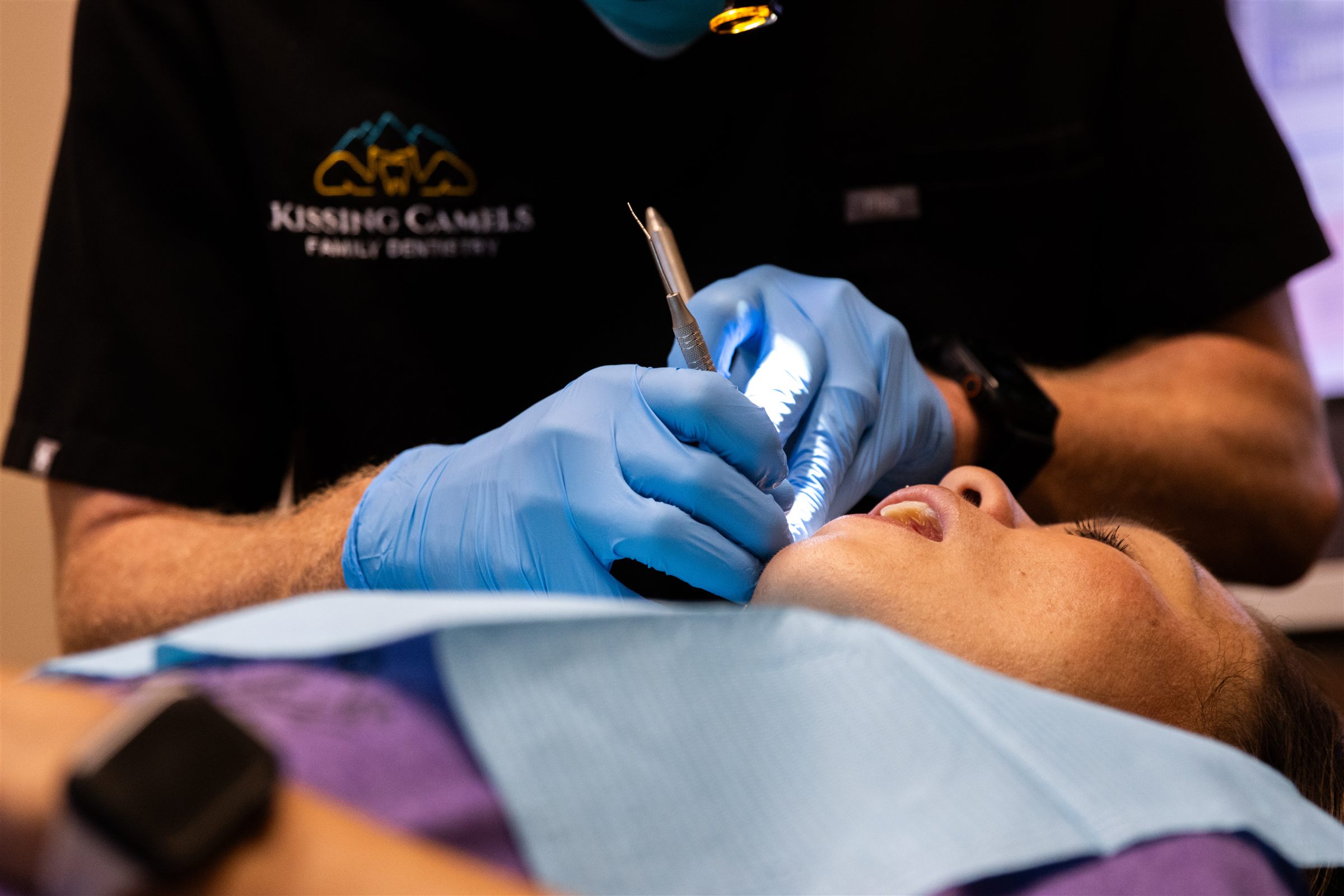
A zing of pain from ice water or a hot cup of coffee can make eating and drinking less enjoyable. Sensitive teeth are common, and there are steps that can help. Our team at Kissing Camels Family Dentistry in Colorado Springs is here to help you find relief and figure out why it is happening.
Why Teeth Become Sensitive
Under the hard outer enamel is a softer layer called dentin. When enamel wears thin, gums pull back, or a cavity forms, dentin can become exposed. Dentin contains tiny channels that lead toward the nerve, so temperature and acidic foods can trigger sharp discomfort.
Common Triggers
- Hot or cold foods and drinks
- Sweet foods
- Acidic foods and beverages
- Brushing or flossing
- Cold air against the teeth
Ways to Ease Sensitivity
- Brush gently: Use a soft-bristled brush and fluoride toothpaste, and clean along the gumline without scrubbing hard. Floss daily to keep plaque from building up and irritating the gums.
- Try desensitizing toothpaste: These products are made to help block the sensations that reach the nerve. They work best when used regularly as part of your routine.
- Go easy on acidic items: Citrus, tomatoes, soda, and wine can wear enamel. Enjoy them in moderation and rinse with water afterward.
- Protect against grinding: If you grind your teeth at night, a custom night guard from your dentist cushions your teeth and helps prevent further wear.
- See your dentist regularly: Checkups let us find the source of sensitivity and suggest options such as fluoride, sealants, or a restoration.
- Consider fluoride treatments: Fluoride helps strengthen enamel and can reduce sensitivity to temperature.
- Deal with gum recession: If receding gums are exposing the roots, your dentist may discuss treatments to cover and protect them.
Get Help for Sensitive Teeth
Sensitivity is not something you have to simply put up with. Contact Kissing Camels Family Dentistry to schedule an exam, and we will work with you to find the cause and a plan for more comfortable days.