3470 Centennial Blvd, Suite 200
Colorado Springs, CO 80907
Se habla español

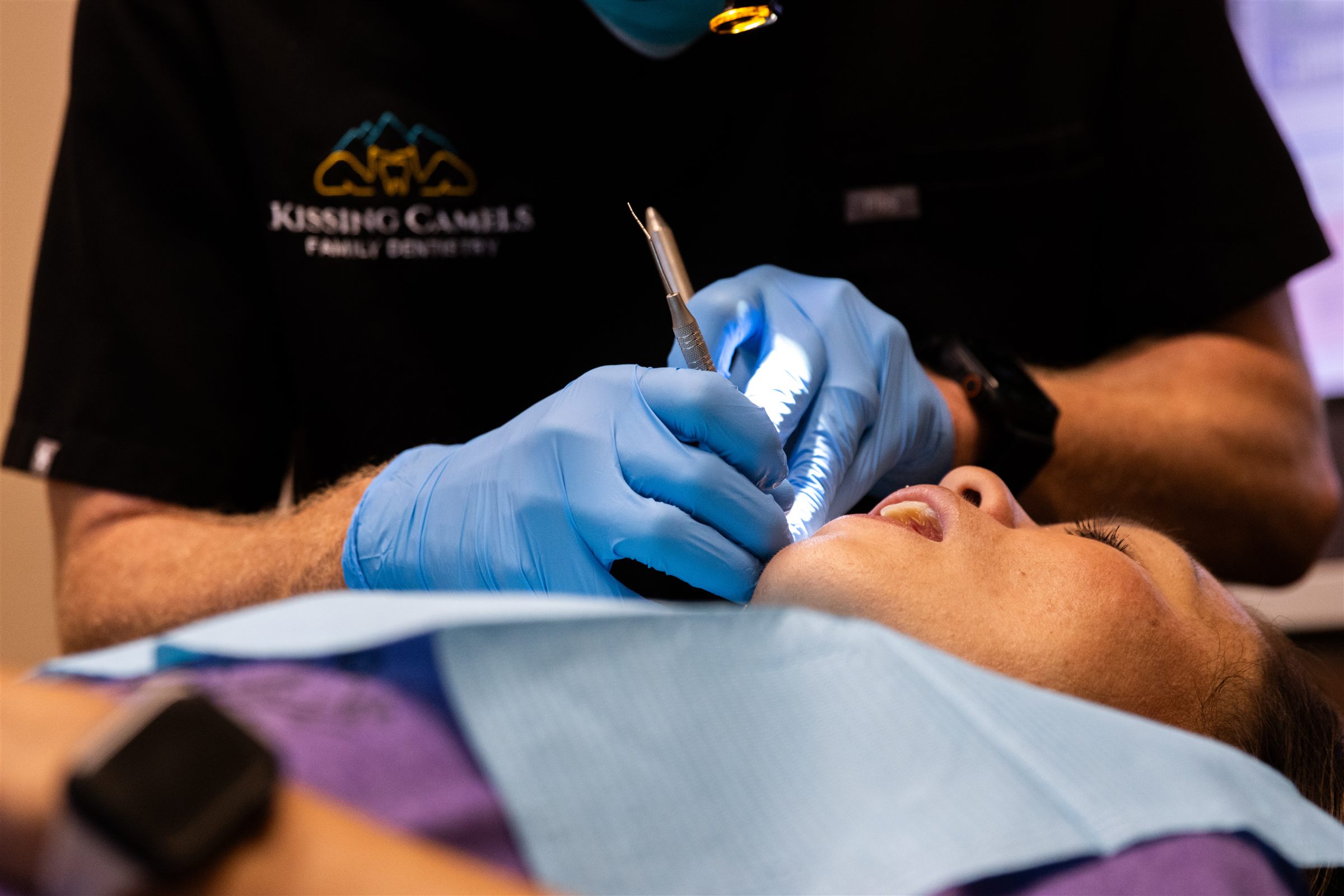
Enamel is among the hardest materials in the human body, and our teeth put it to work all day long. Still, a small chip can appear when you least expect it. Crunching an ice cube, biting a hard candy, or opening a bottle with your teeth is often enough. People who clench or grind, who have gum or tooth disease, or whose enamel has been softened by acid face an even higher chance. When a tooth does get damaged, bonding is one of the gentlest ways to repair it, and our Colorado Springs team is happy to explain how it works.
Bonding can rebuild a damaged tooth and help keep the problem from getting worse. As you read on, think about whether it fits your own situation.
Bonding is a treatment that is both restorative and aesthetic. We use it for chips, cracks, and other minor damage. It can also brighten the look of a stained tooth, close a narrow space between teeth, or make a short tooth match its neighbors in length.
The material is a tooth-colored composite resin. We select a shade that resembles your natural enamel, then shape the resin over the affected spot until the tooth looks complete again. Because the color is matched, the repair tends to disappear into the rest of your smile.
A lot of patients come in because a chipped tooth bothers them in photos. That is a fine reason, but there is a health side too. A rough or broken edge can make chewing uncomfortable and can invite further breakage. Repairing it early protects the tooth itself and the teeth beside it. If you have noticed a chip or a worn edge, scheduling a visit with us is a sensible first step.
The best candidates have teeth with limited damage and no serious decay. When a tooth is severely broken, or gone altogether, we may talk with you about a crown or an implant instead. An implant is different from bonding because it replaces the root along with the part of the tooth you can see.
Many bonding repairs can be done without numbing. We may suggest anesthetic when a cavity needs to be filled first, when the damaged area sits near a nerve, or when the tooth needs a larger amount of reshaping.
Bonding is a simple treatment that does not require a hospital stay or a long recovery. It usually takes away little to no healthy tooth structure, which sets it apart from veneers. If the resin does chip down the road, it can frequently be touched up or replaced without a major procedure. Even so, resin is not as strong as natural enamel, and your dentist will tell you what to expect for the specific tooth being treated.
Keep your bonding in good shape by staying away from habits that put stress on teeth. Chewing on ice, pens, or fingernails can chip the resin as well as natural enamel. Try to go easy on sticky candy and sugary snacks, too.
Resin also picks up stains more readily than enamel does. Coffee, tea, red wine, and tobacco can all leave a mark over time, so brushing well and rinsing after these items helps.
Another point to know is that bonding material does not lighten with whitening products. Gels work on natural teeth only, so a bonded tooth stays the same shade while its neighbors get brighter. That mismatch can be a surprise. If whitening is on your wish list, do it beforehand, let us know, and we will match the resin to your new shade. Should a bonded tooth stain later, replacing the resin or choosing a veneer may be the answer.
Teeth are tough, yet they can still be damaged. Bonding can address chips, cracks, and small spaces, and it works best on healthy teeth that have only mild wear or injury. Before your appointment, think about how you feel about the overall color of your smile, since that can shape our plan.
If a chipped or uneven tooth has been on your mind, reach out to Kissing Camels Family Dentistry. We would love to talk through your options and find a time that suits you.